

People ask me this more than almost anything else. Why Raaga. Why Deccan. Why Sitar for a planter that has nothing to do with music except that it stands up straight.
I’ll try to answer it properly, once, here, so I stop explaining it badly at dinner parties.
The naming conventions at Midori
Raaga came first, sort of by accident. We had three ribbed terracotta forms on the table — one tall, one tapered, one with a stepped base like a small plinth — and someone said they looked like they were waiting to be played. I didn’t love the comparison at first. It felt like a stretch. But the ribbing really does run like strings, close and vertical, and once Santoor, Veena, and Sitar had names, the whole collection clicked into place in a way it hadn’t with three separate product codes. Santoor for the one with the most texture, because santoors are struck, not plucked. Veena for the curved one. Sitar for the tall one, because sitars are tall too, and I am not always subtle.

Deccan is less playful and more deliberate. Vittala and Hampi are named after actual places — UNESCO heritage sites, not invented words — because those forms are doing something specific: they’re heritage pieces, meant to read as credible the moment an architect or a hotel GM sees them in a portfolio. I will not rename those two. Ever. They’ve earned the names they have.

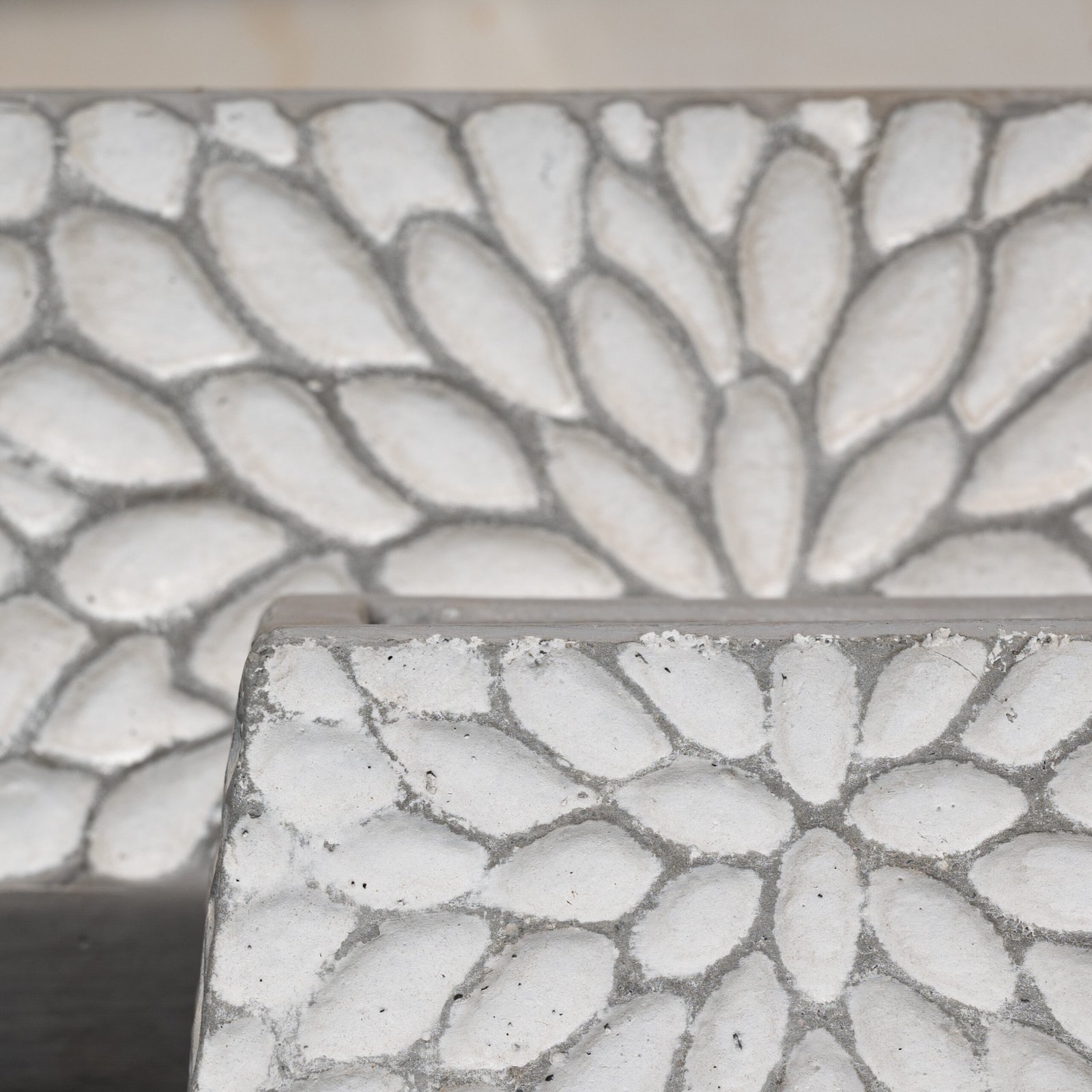
Botanica is the easy one. If a piece has a carved leaf or flower pressed into the body, it’s Botanica. Frond, Dahlia, Rosa, Areca — named for what’s literally on the surface. No hidden meaning to chase here, which is honestly a relief after the other two.
Some pieces don’t get a collection at all, not yet. We have a chevron piece called Crest sitting on its own right now, and a rope-rimmed terracotta pot called Kaavi that’s named after a Goan mural technique — red oxide etched through white lime plaster, centuries old, nearly forgotten — because the surface treatment reminded me of it the first time I saw the finish dry. I’m not going to force either of them into a collection just to tidy up a spreadsheet. A name should mean something before it gets used. If it doesn’t yet, it waits.

That’s the whole system, more or less. Not a grand plan. Just names that earned their place, one pot at a time.