
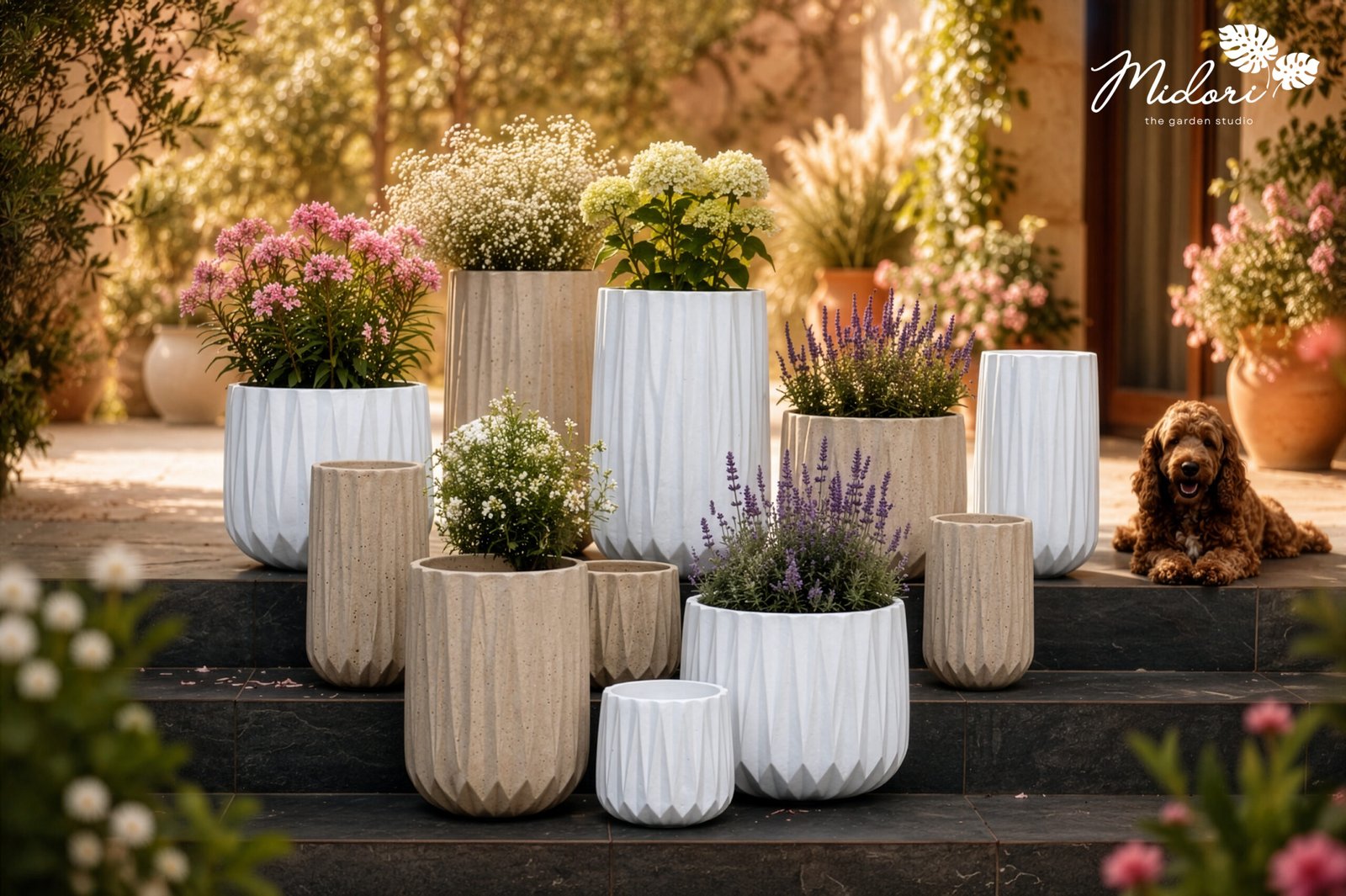
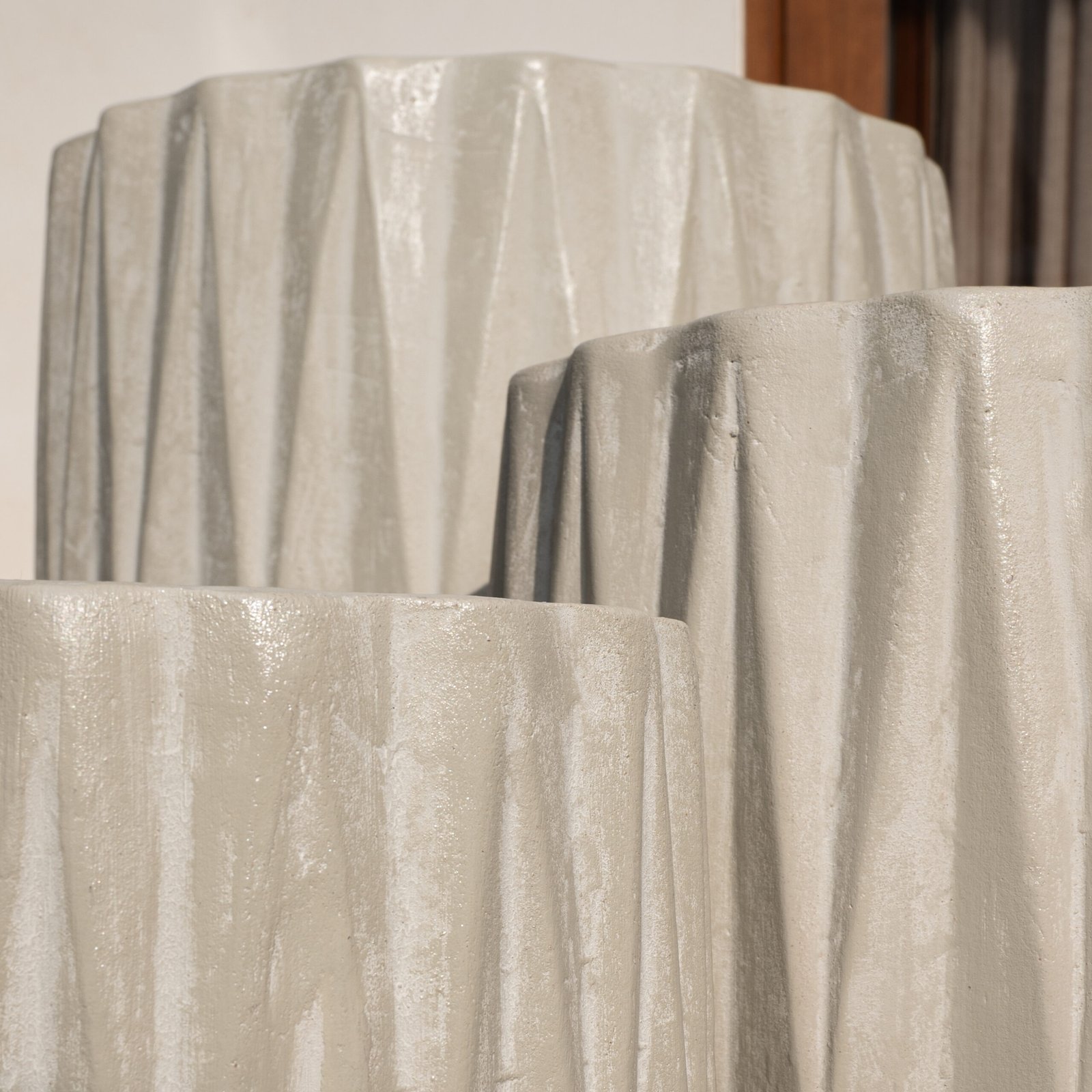
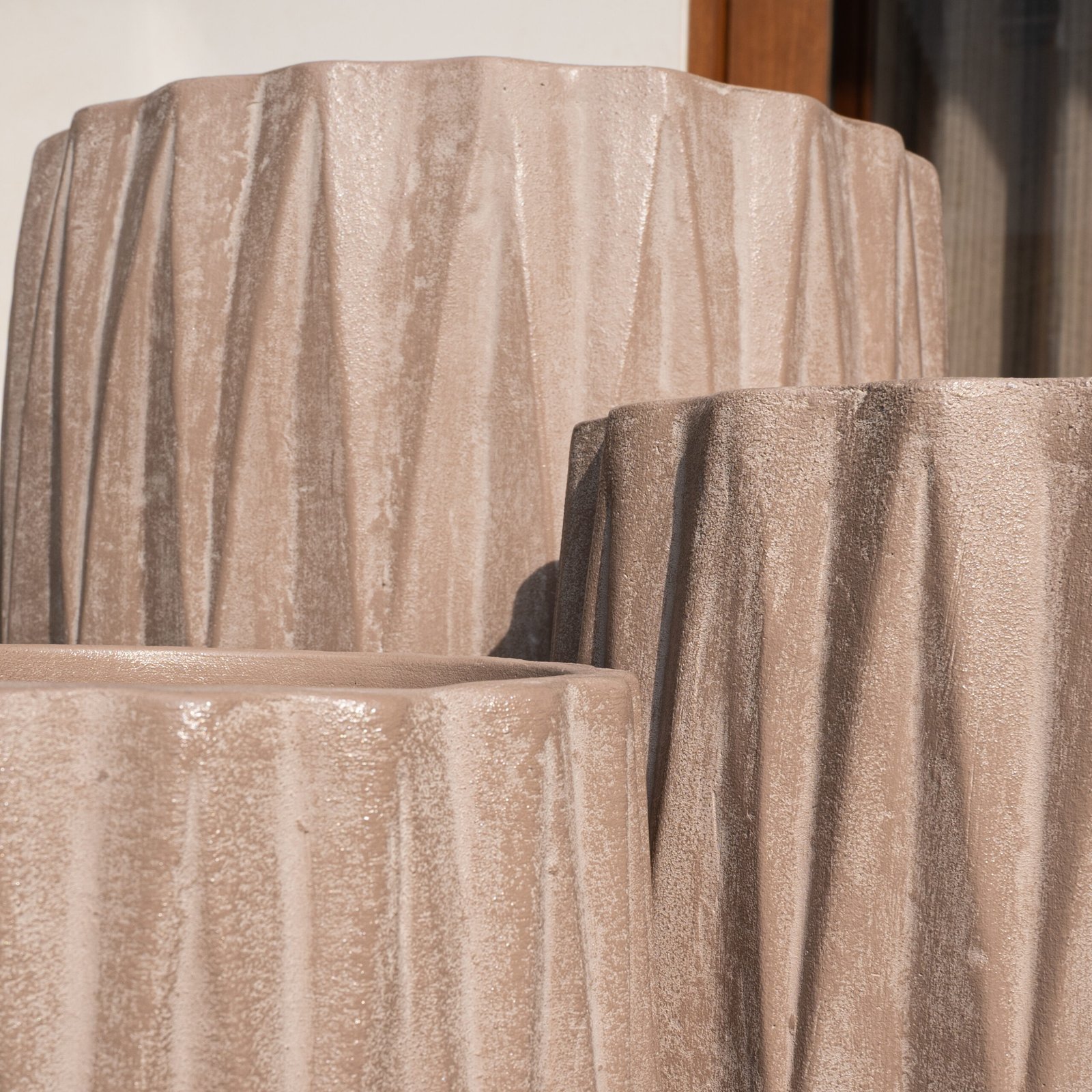
Some forms feel like a single intake of breath, made solid.
The Tsuki terracotta planter family of the Origami collection takes the most enduring Japanese gesture — paper, folded with care — and renders it in one of the world’s oldest materials: Terracotta — terra cotta, cooked earth — is among the oldest substances humans have shaped. Created by hand, each piece carries the warmth of fired earth beneath its matte coat of mineral pigment.
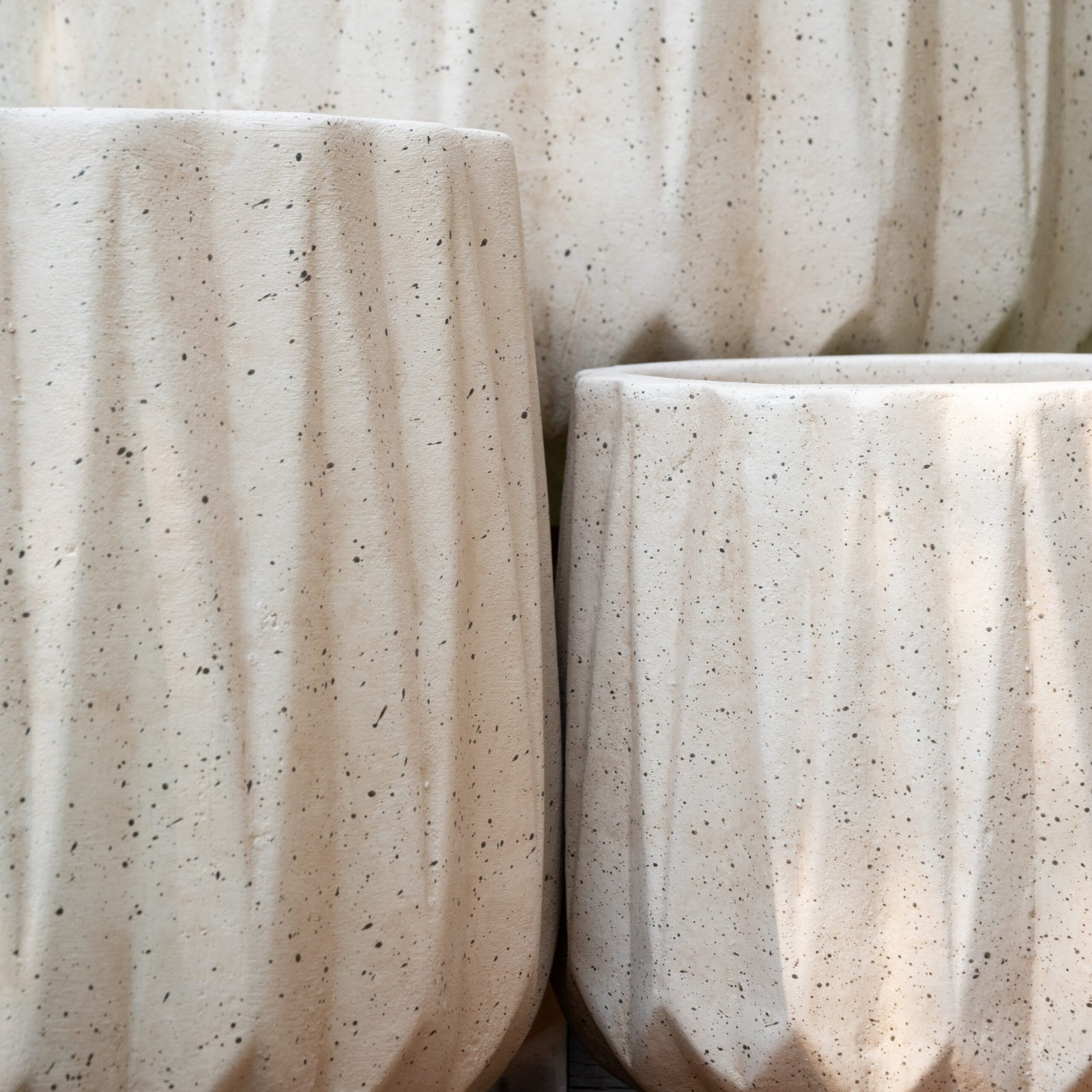
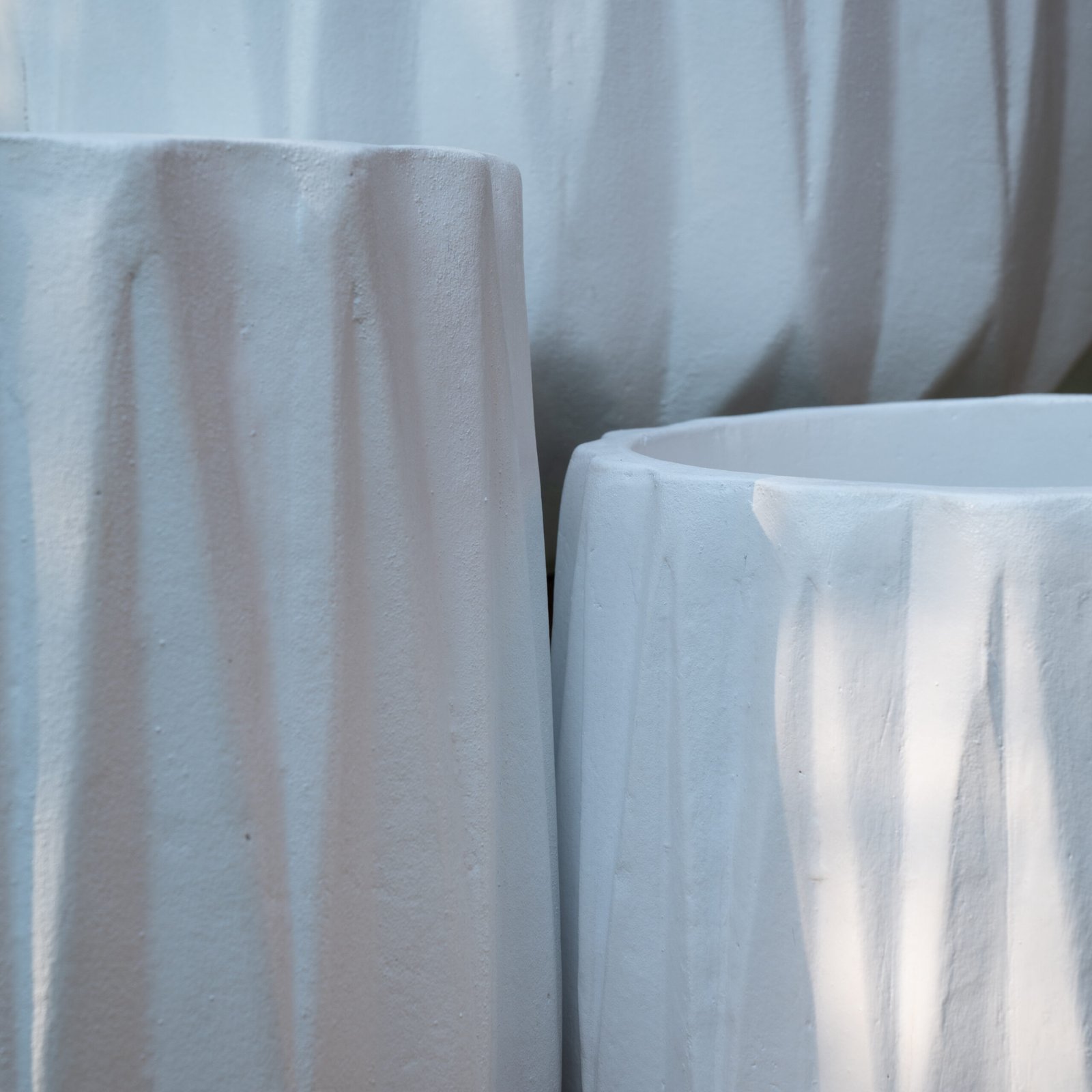
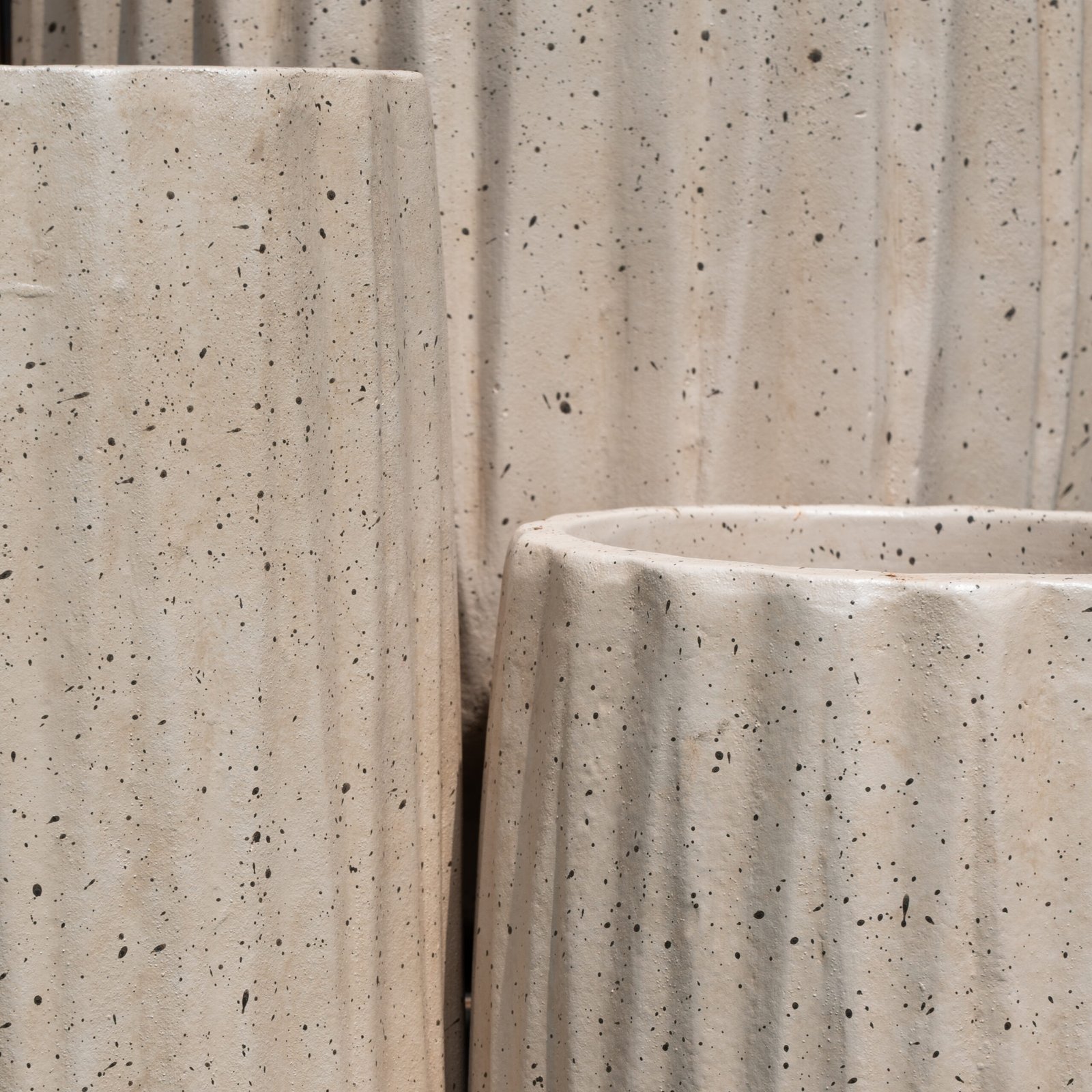
Sharp facets rise from the base in narrow vertical planes, each catching light a little differently. The body is tall and urn-shaped, with a gentle taper at the foot and a softly opening mouth. The result is sculptural without being loud — shibui, the Japanese would say. Quiet beauty. The painted finish keeps the form contemplative rather than reflective — clay that holds light rather than throws it back. The effect shifts through the day: bright and architectural at noon, soft and contemplative at dusk, almost luminous under moonlight.
The Tsuki family arrives in four moods, each drawn from the Japanese natural world
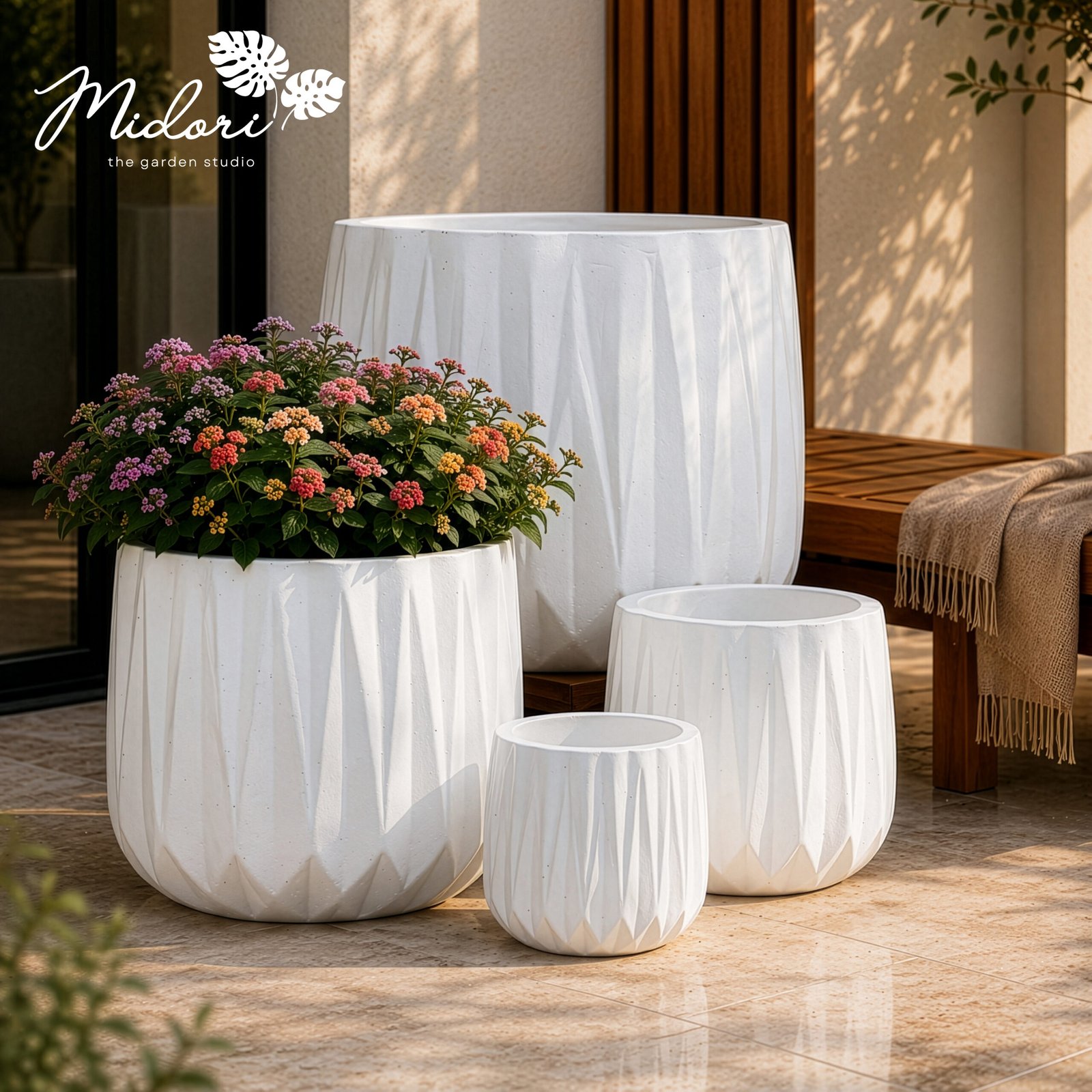
- Tsuki Shiro (白) — the white of snow under moonlight, of unbrushed paper, of ceremony.
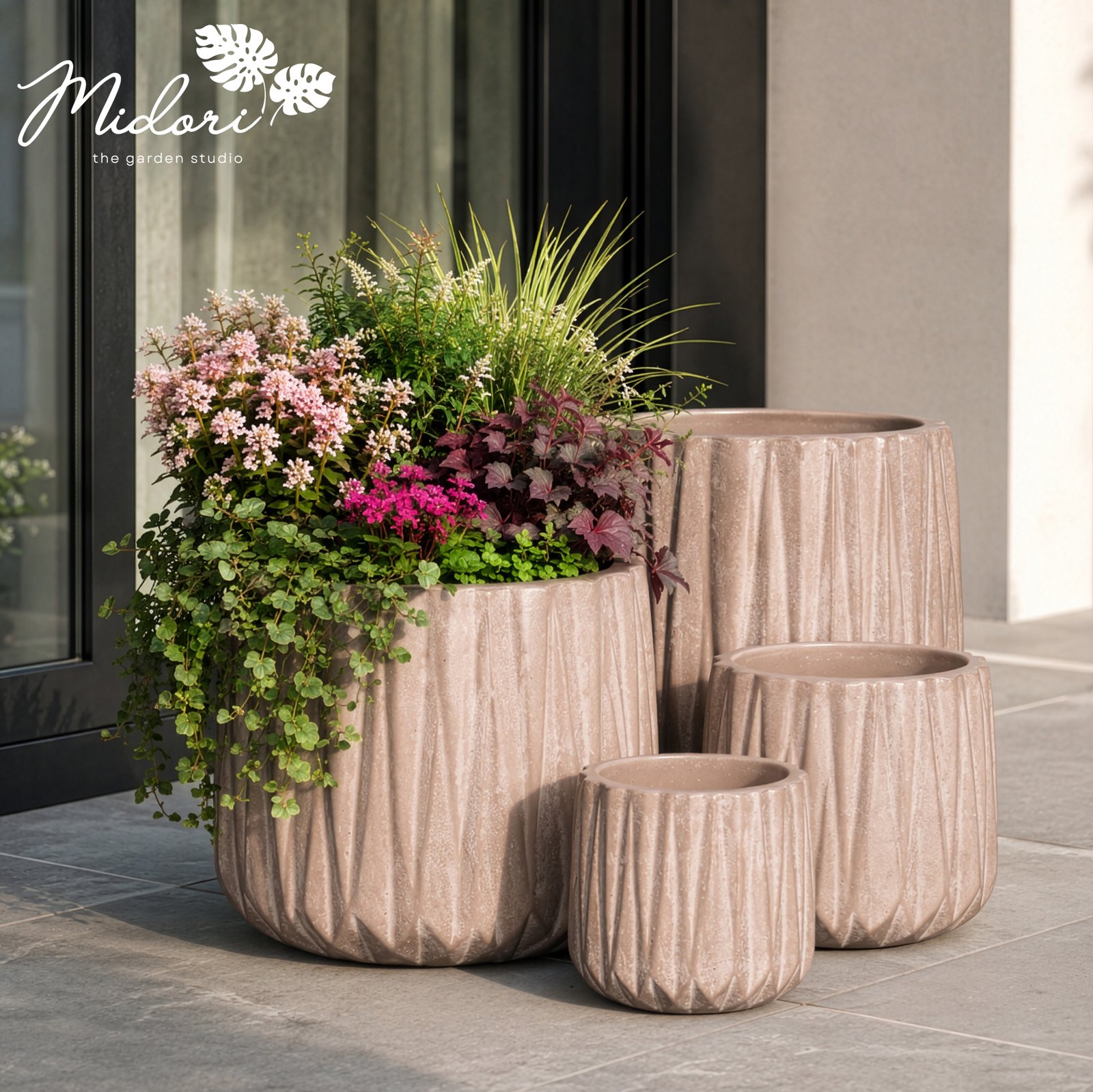
- Tsuki Sakura (桜) — the soft pink-tan of cherry blossoms past their peak, of petals carried on a warm spring wind.
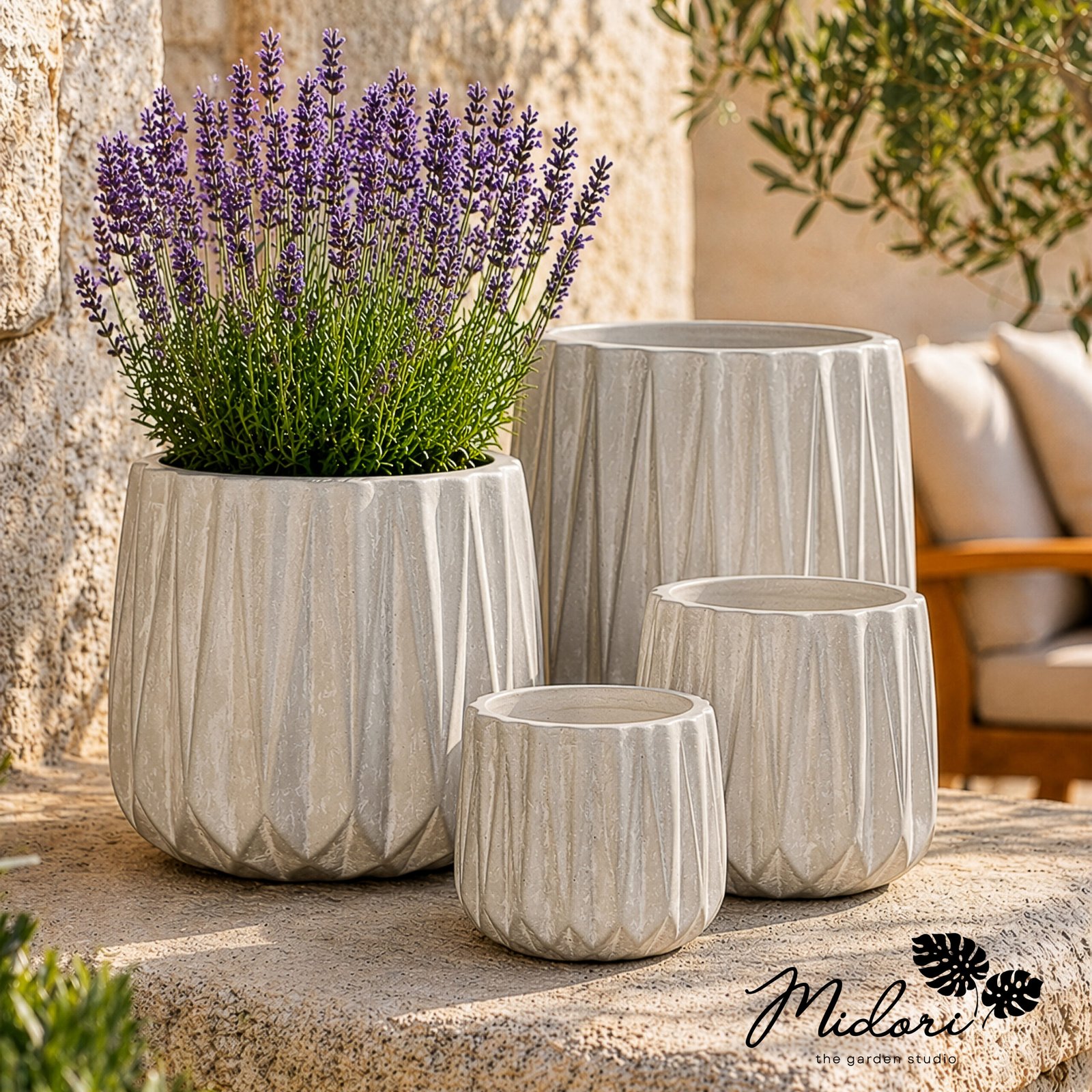
- Tsuki Ishi (石) — the warm grey of weathered stone, of old garden walls and river-smoothed pebbles.
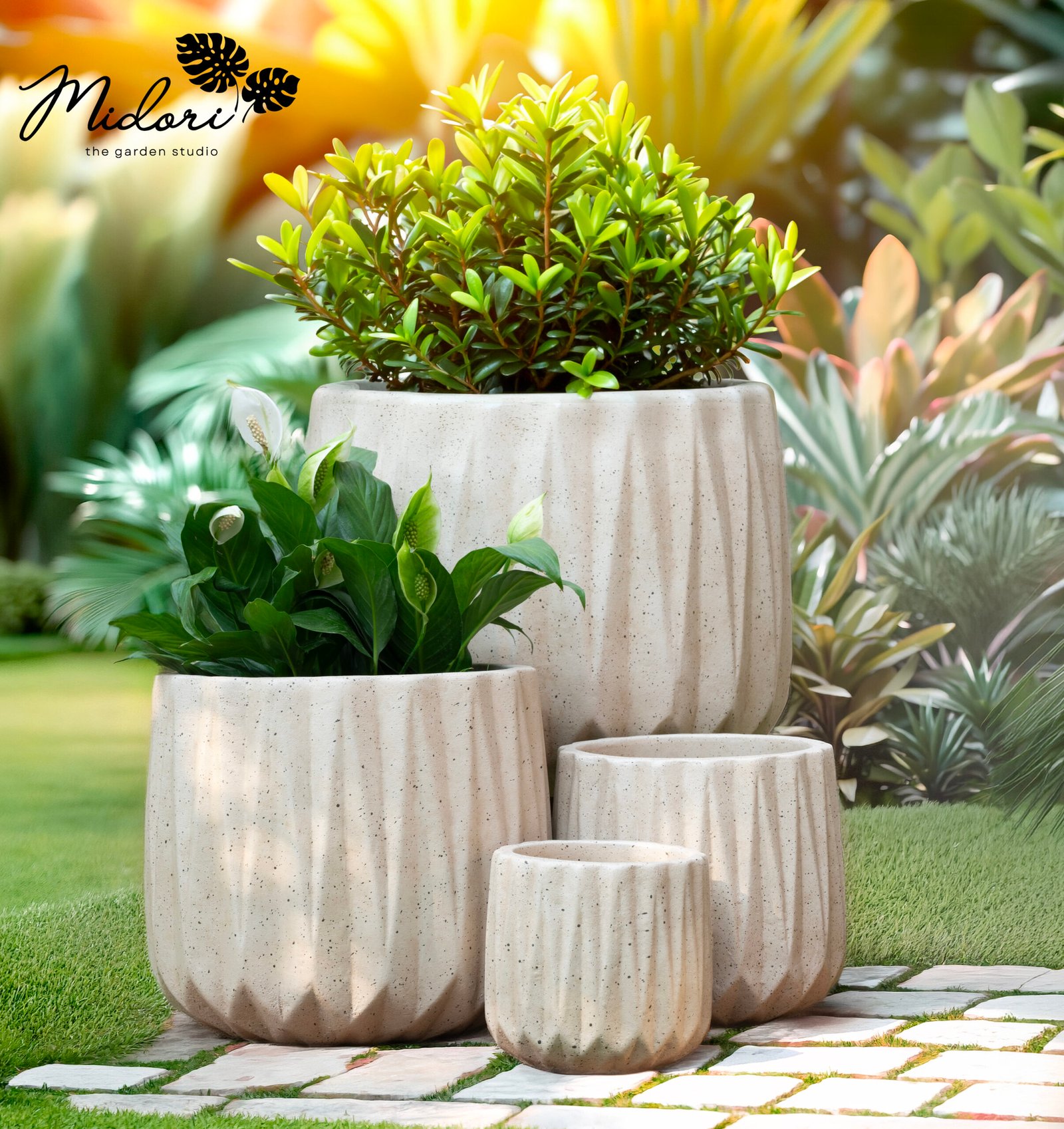
- Tsuki Suna (砂) — fine mineral speckle, like the floor of a dry riverbed or the gravel of a raked Zen garden.
The four Tsuki terracotta planters have the same painted terracotta body, the same hand-finished character. The painted finish keeps the form contemplative rather than reflective — clay that holds light rather than throws it back. The effect shifts through the day: bright and architectural at noon, soft and contemplative at dusk, almost luminous under moonlight.
Suited to indoor spaces and sheltered outdoor settings — covered porches, verandas, balconies under shelter, courtyards beneath eaves, living rooms, lobbies. Available in graduated sizes, sold individually or as a complete set of four.
Tsuki terracotta planter earns its place as a housewarming statement, a wedding or ceremony piece, a corporate gift of restraint and craft, or a sculptural anchor in boutique hotels, designer cafés, and architect-led interiors.
Every planter ships with a drain hole as standard. If your placement does not require drainage, the hole can be sealed at your end after delivery.
Care and placement of Tsuki terracotta planters
Painted terracotta in a hand-finished, traditional material — it asks for slightly more care than glazed or composite planters, and rewards it with character that deepens over time.
- Placement: Best suited to indoor spaces or sheltered outdoor settings — covered porches, verandas, balconies under eaves, courtyards with overhead cover. Avoid prolonged direct rain and harsh midday sun, both of which may gradually fade the paint over years.
- Cleaning: Wipe gently with a soft, dry or barely damp cloth. Avoid soaking, abrasive cleaners, or pressure washing — all can dull or lift the matte paint.
- Watering: Use the drain hole or a saucer to prevent standing water. Terracotta is porous, so consistent damp against the body can stain or weaken the paint.
- Refresh: With years of outdoor use, the painted finish may soften or develop natural patina — many owners come to prefer this aged character; others choose to refresh with a coat of mineral paint.
Midori Pairings — Shiro
🌸 Romantic — Ceremony in bloom. White Orchid · Lily · Jasmine. Bright indirect light · moderate water. 🟡 Joyful — Vivid against white. Lantana (as photographed) · Bougainvillea · Salvia. Bright direct light · regular water. 🟢 Serene — Quiet white. Peace Lily · trailing Pothos · Money Plant. Bright indirect light · moderate water.
Midori Pairings — Ishi
🟤 Earthy — Mediterranean. Lavender (as photographed) · Rosemary · Olive. Bright direct light · sparing water. 🟡 Joyful — Sun-warmed. Marigold · Geranium · Pentas. Direct light · moderate water. ⬜ Refined — Soft architecture. Ornamental grass · Silver-leaf foliage · Pampas. Bright light · moderate water.
Midori Pairings — Sakura
🌸 Romantic — Soft against modern. Astilbe (as photographed) · Begonia · trailing Pothos. Bright indirect light · moderate water. 🌿 Wild & Lush — Layered planting. Heuchera · ornamental grass · ivy. Bright light · moderate water. ⬜ Refined — Architectural calm. Silver-leaf foliage · Sansevieria · ornamental millet. Bright light · minimal water.
Midori Pairings — Suna
🌿 Wild & Lush — Garden-grown. Peace Lily (as photographed) · Boxwood · Fern. Bright indirect light · keep evenly moist. 🟤 Earthy — Biophilic. Sansevieria · ZZ · Succulent mix. Low to bright light · sparing water. 🟢 Serene — Calm earth. Money Plant · Pothos · Spider Plant. Bright indirect light · moderate water.
Beena’s styling notes
Tsuki works alone, but it was designed for groupings. Place three descending sizes together — Large anchoring the back, Medium mid-left, Small forward and slightly off-axis — and you have what I call the moon in three phases: full, half, crescent. Let them breathe between each other; don’t push them together. In Blush Rose or Desert Sand, a trio belongs on a covered terrace with Bougainvillea spilling over the large. In Pearl White or Limestone, a single Large in a living room corner planted with a Peace Lily is a complete composition on its own. Tsuki doesn’t need company — but it rewards it.






Reviews
There are no reviews yet.