

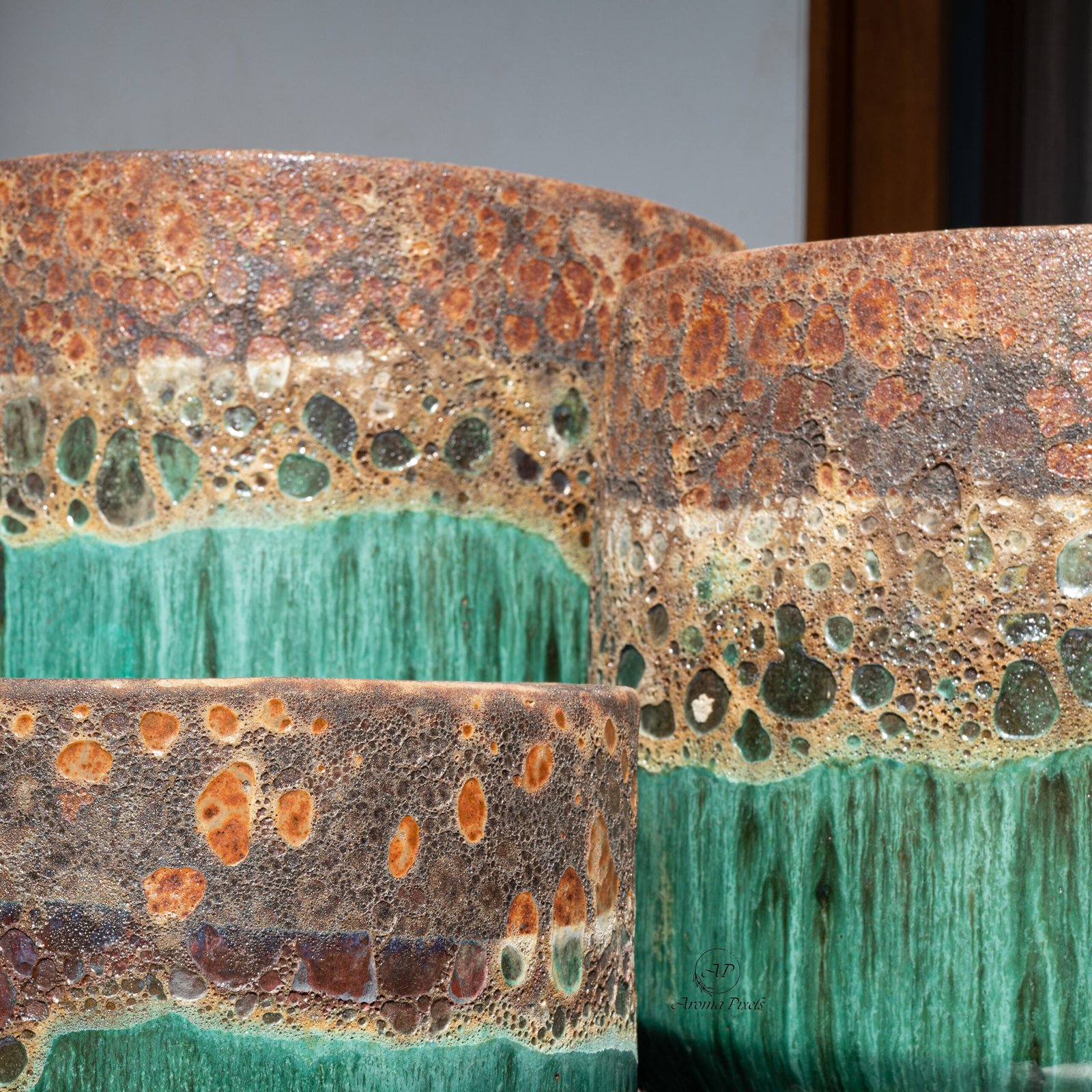
Some pieces look made. Crater looks found — as if it had always been there, weathering quietly through seasons.
About Crater reactive glaze ceramic planter
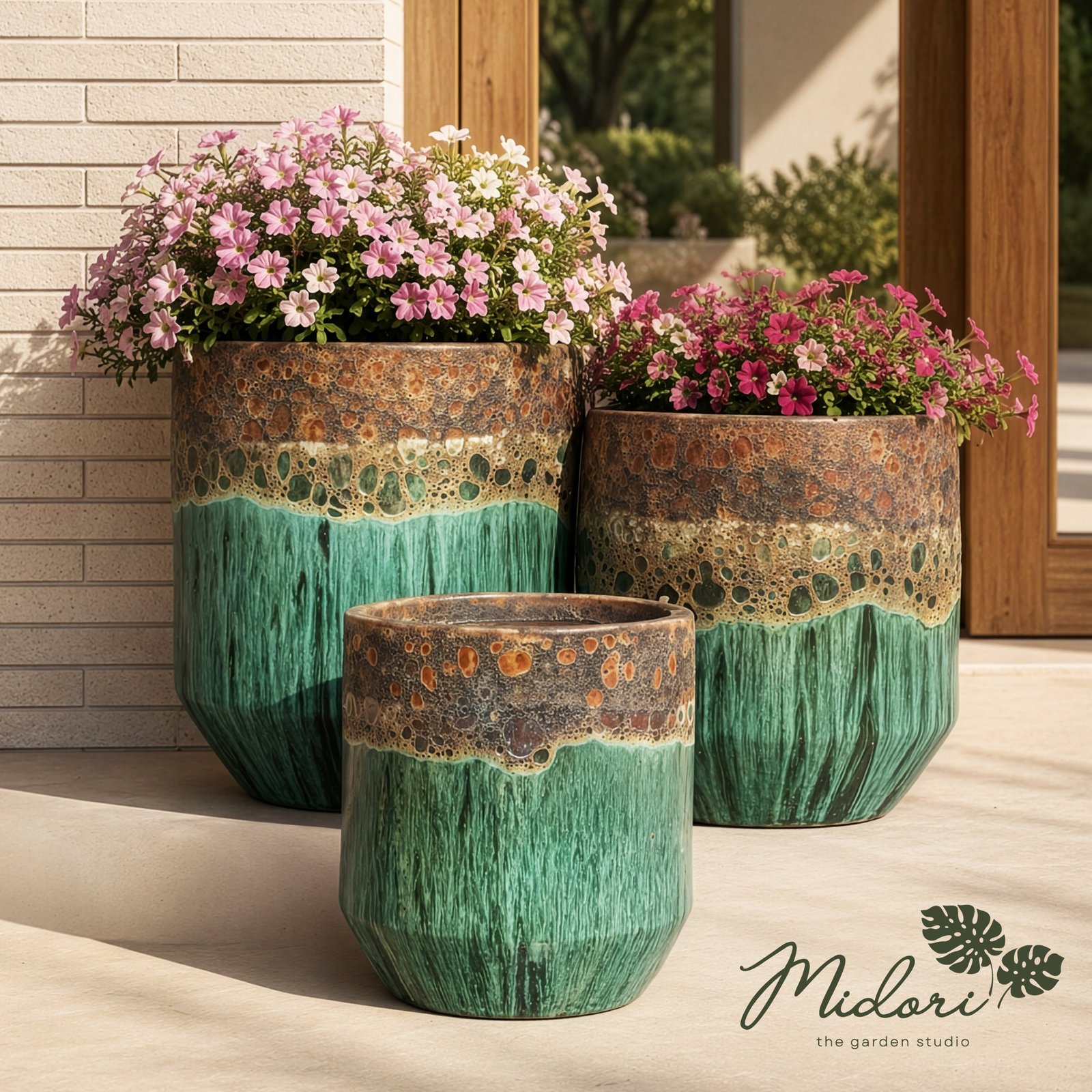
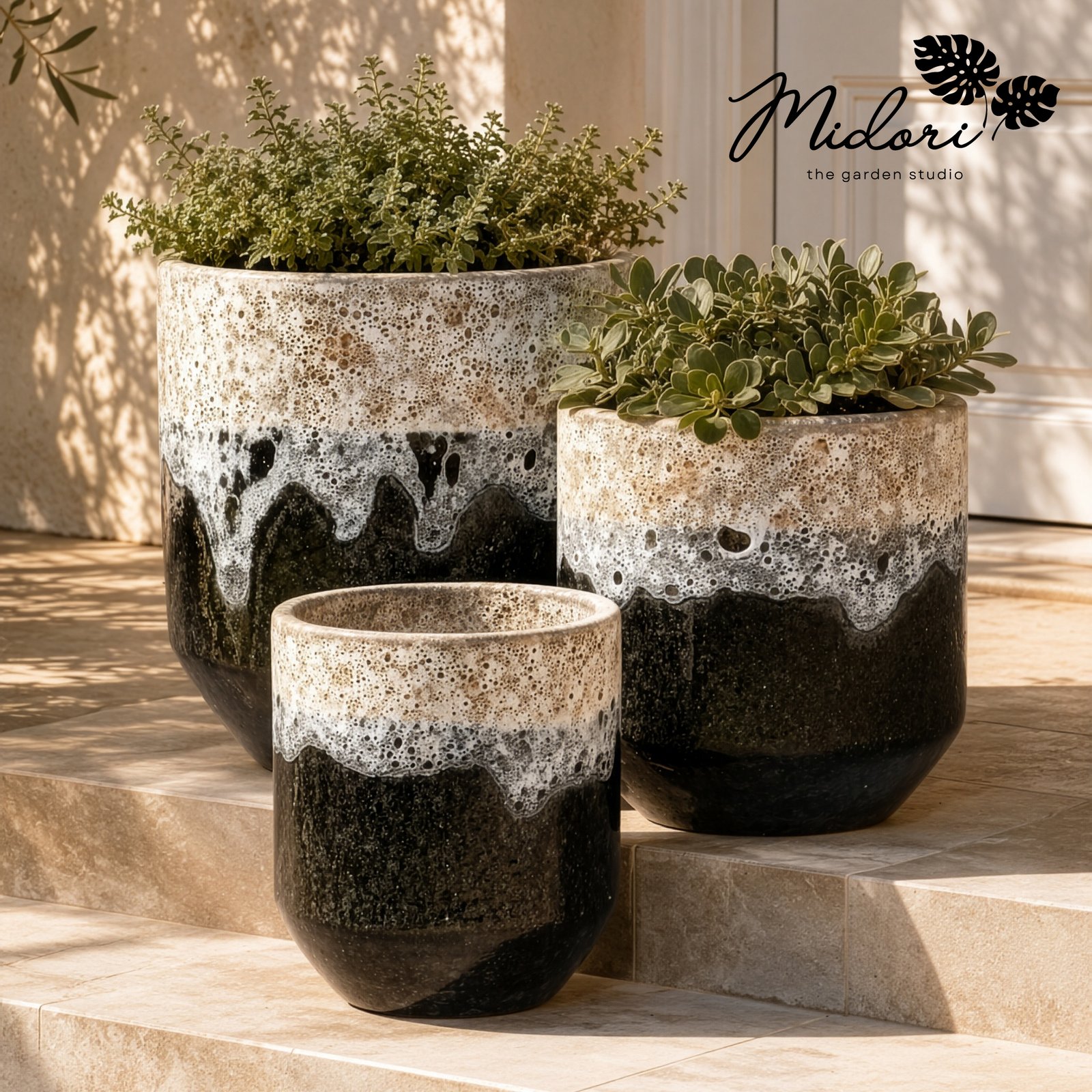
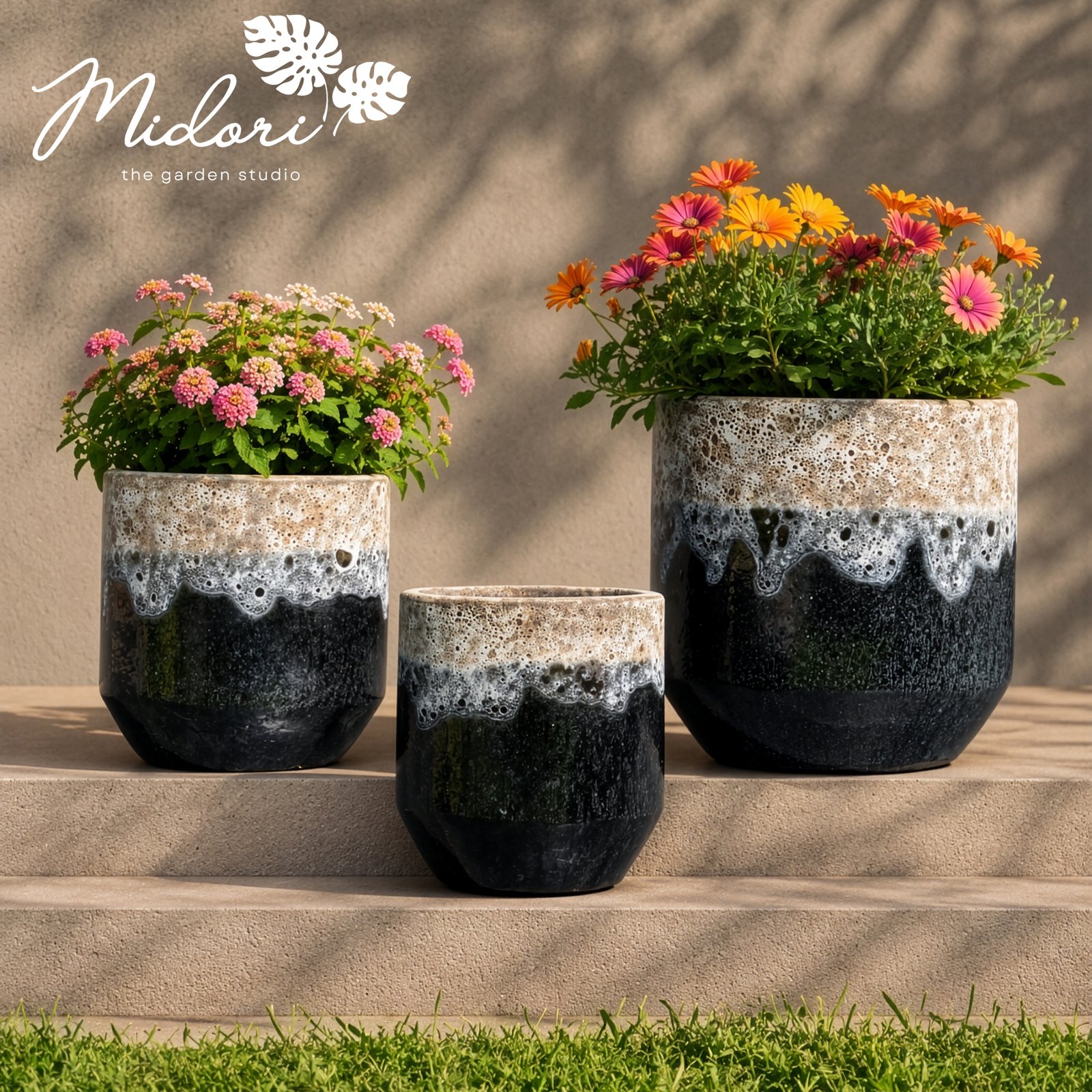
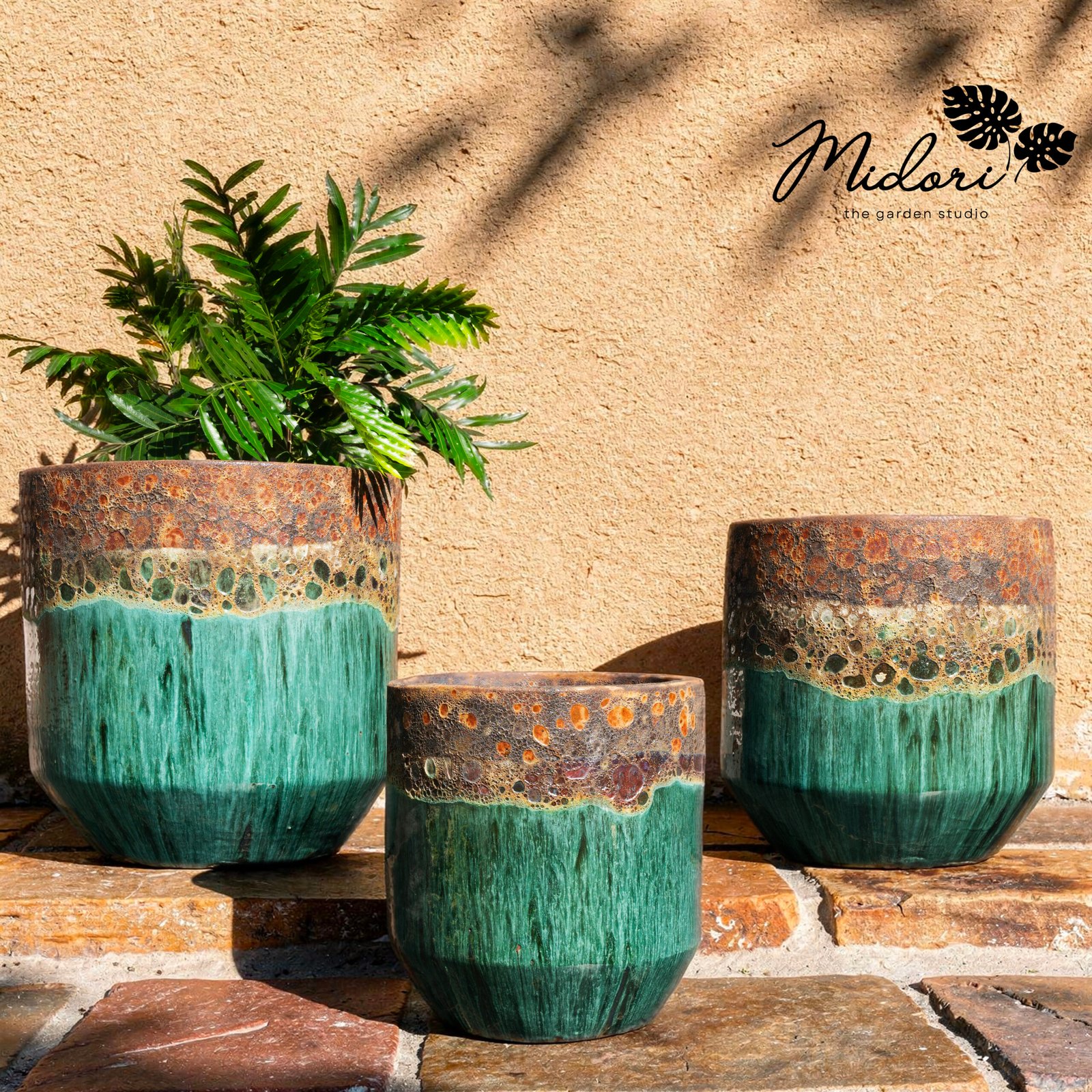
Crater reactive glaze ceramic planter’s form is architectural: a straight-sided reactive glaze ceramic planter column, gently tapered at the base. The upper third wears a heavily textured rim — bubbled, mottled, mineral, almost geological. The lower body falls smooth, the reactive glaze running down it in slow vertical streaks like a tide pulling back.
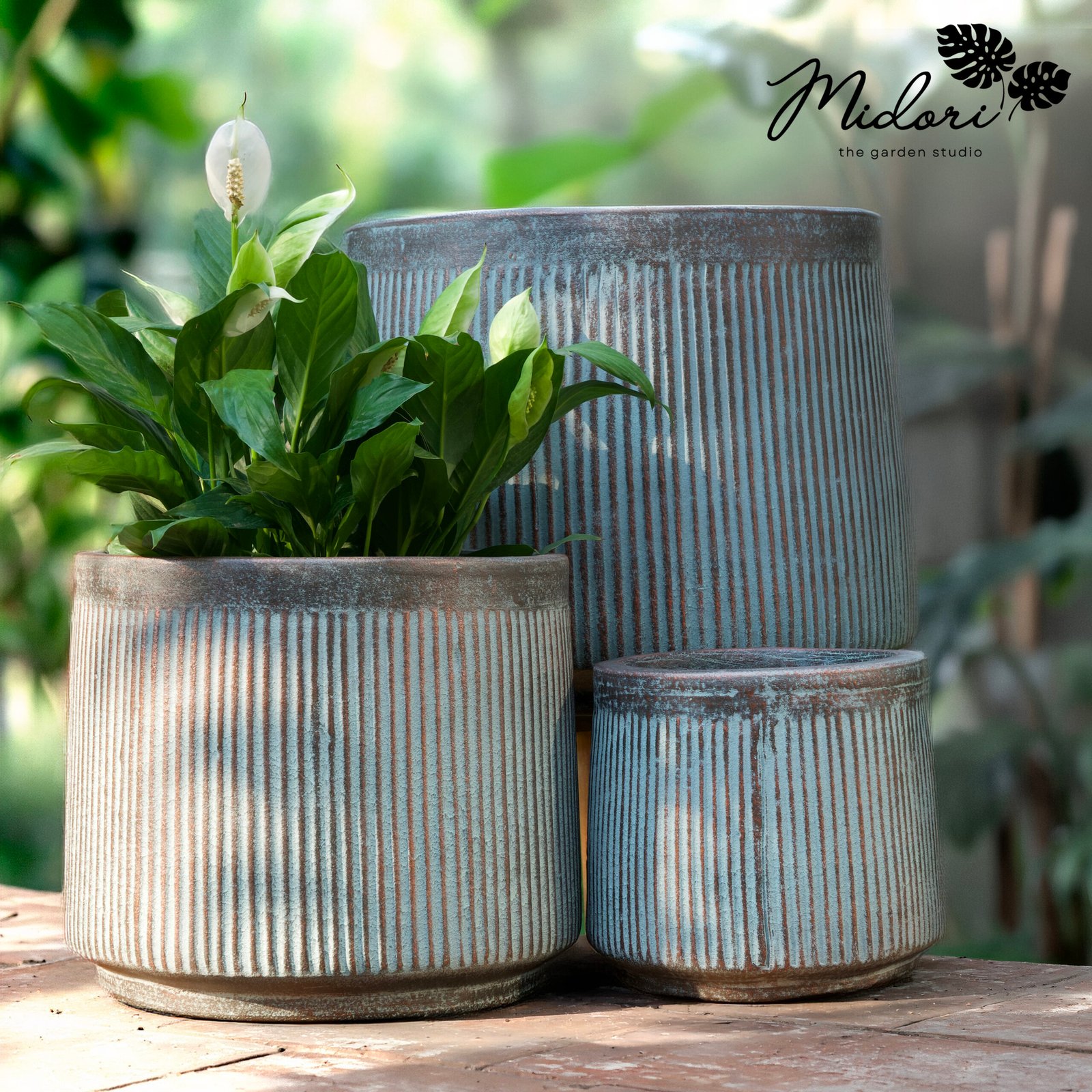
The collection comes in two moods. Crater Moss carries a crust of rust, ochre, and copper over a deep teal-green body — like moss-grown stone at a tropical waterline. Crater Stone carries a foam of cream and sand over charcoal black — like sea spray frozen against basalt, or ice over dark earth. Both share the same form, the same kiln-born unpredictability.
Because the glaze is reactive, no two Craters are ever quite the same. The rim crusts differently each time. The drips fall where they will.
Crater reactive glaze ceramic planter – best suited for –
Suited to indoor and outdoor spaces — entrances, courtyards, balconies, terraces, lobbies, biophilic offices. Available in graduated sizes, sold individually or as a complete set. The collection earns its place as a housewarming statement, a corporate gift of weight and taste, a festive centrepiece, or a sculptural anchor in cafés, boutique hotels, spas, and architect-led interiors.
| Attribute | Value |
|---|---|
| Color | Crater Moss & Crater Noir |
| Finish | Reactive teal-green glaze, rust-and-ochre crater rim /Reactive charcoal-black glaze, cream and sand crater rim |
| Material | Glazed ceramic, reactive finish |
| Form | Straight-sided architectural body, textured rim |
| Colour notes | Rust · ochre · copper rim → deep teal-green body / Cream · oyster · sand rim → charcoal-black body |
| Sold as | Individually or as a graduated set |
Care
Reactive glazed ceramic. Suitable for indoor and outdoor use; the reactive surface tolerates sun and rain. Wipe with a soft, damp cloth to restore sheen. In frost-prone climates, empty and shelter through winter to protect the glaze. Use the drain hole or a saucer to prevent standing water. The crater rim’s texture may catch dust over time — a soft brush is gentler than a cloth on that surface.
Midori Pairings — Crater Moss
🌿 Wild & Lush — Tropical waterline. Areca palm · Bird of Paradise · Fern (as photographed). Bright filtered light · keep evenly moist. Big tropical foliage over the green and rust crust reads like rainforest floor.
🟤 Earthy — Sun-baked terrace. Jade · Aloe · Echeveria. Bright direct light · sparing water. Succulent silvers and pinks set the rust rim alight.
🟡 Joyful — Garden in bloom. Ixora · Anthurium · Marigold. Direct to bright light · regular water. Warm flowering tones echo the ochre crust.
Midori Pairings — Crater Stone
⬜ Refined — Architectural quiet. Sansevieria · ZZ · Aglaonema ‘Silver Bay’. Low to bright indirect light · minimal water. Sculptural greys and silvers feel inevitable against the monochrome.
🌸 Romantic — Soft against dark. Trailing Pothos · String of Pearls · White Orchid. Bright indirect light · moderate water. Pale foliage softens the contrast beautifully.
🟤 Earthy — Stoneware calm. Succulent mix · Jade · Haworthia (as photographed). Bright light · sparing water. The textures of succulent and crater rim mirror each other.
Beena’s styling notes
Crater Noir belongs outdoors — on a terrace, a garden ledge, a covered porch where light falls across it through the day. The foam glaze at the shoulder catches afternoon sun differently every hour; in the morning it reads as cream and stone, by evening it almost glows. Plant it with something that wants to spill — Lantana, Calibrachoa, trailing Bougainvillea — so colour erupts over the dark base the way the glaze itself erupts over the body. In a trio of three descending sizes, it reads like a geological arrangement. Indoors, a single Large on a concrete floor with a Bird of Paradise is a complete room.
Crater Moss is the wilder sibling — more forest, more ancient, more difficult to categorise, which is exactly the point. The green striations on the body look like something that grew there over decades. Place it where it can be seen up close — a courtyard corner, a covered entrance, a low garden wall — because the detail in the glaze only reveals itself at proximity. Plant it with something that echoes the rust in the shoulder: orange Gazania, copper Marigold, or a red-tipped Dracaena. In a pair with Crater Noir, the two read as a complete conversation — darkness and forest, volcanic and alive.





Reviews
There are no reviews yet.